Monday, April 22, 2013

Cheongdo: Bullfighting, a Wine Tunnel and a Temple

 Entrance to the Cheongdo Bullfighting Stadium

This past weekend, the city of Cheongdo (정도시) held its annual bullfighting festival (소싸음 축제). While even now I'm not sure how I feel about having bulls fight each other, it is an interesting tradition. The first thing on everyone's mind when I told them I was going to see a bull fight was, "Oh no! I would hate to see a bull killed like that!", thinking of Spanish bullfighting. However, Korean bullfighting is quite different. In fact, here in Cheongdo, it's not people that fight the bulls, but another bull.

Two bulls in the ring

Bulls square off in the ring, and, through a series of head butts, force one of the bulls to stand down. Throughout the fight, the bull owners coach their bulls by shouting commands. A fight typically lasts between two and ten minutes. Once it's over, the bulls are lead out of the ring again. No bulls are killed in the process, and I've heard that serious injury to the bulls is rare.

Two bulls, mid-fight

Finally, one bull backs down and runs away, the one who stays is the winner!


However, just like any festival in Korea, there's always a lot more to do and see than just the main event. Photo ops, traditional Korean games, performers and local products for sale were abound.

 Me with Bunga the Bull

 Trick Art!

 My friend trying Neolttwigi

 My friend trying Gulleongsoe
 Cute bull mascots

Bull art

 Acrobat performance

 Comedy performance

Once we had seen everything in the festival, we headed next door to check out the Cheongdo Bullfighting Theme Park (which was really a museum).

 'Cheongdo Bullfighting Theme Park'

The museum showed the history of bullfighting in both Korea and abroad, plus featured various games and art centered around bulls. 

 Me pulling a fake bull

This entertained us for several hours, but we wanted to see what else the Cheongdo area had to offer. So, we headed down to the 'Wine Tunnel' (와인터널).

 Wine tunnel entrance

This tunnel, originally made for trains in 1904, was converted into a winery in 2006. The year-round cool and humid conditions make it the perfect spot for wine making. However, since the local specialty of Cheongdo is not grapes, but persimmons (감), it is only fitting that this winery produce persimmon wine (감와인).

 Enjoying a glass of wine in the tunnel

While I'm not personally a big fan of persimmons, I had to give this wine a try while I was here and I was pleasantly surprised to find that it's got a great flavor. Slightly sweet, and only a hint of the strong persimmon flavor. You can drink wine here (just 3,000 won/ glass of regular wine), or you can buy a bottle to bring home as a souvenir. Prices start at 18,000/ bottle and go up from there depending on the style or set you purchase. 

 Glass of 'regular' persimmon wine

Evening was approaching, but we couldn't resist the temptation of making one last stop before heading home to Seoul. Just behind the wine tunnel, we saw a sign for a small temple called Daejeoksa Geungnakjeon (대적사 극락전) located just 100m away. We went up to take a peek. 

 Entry gate of Daejeok Temple

While it's certainly one of the smaller temples I've ever visited, it is definitely worth a quick visit. Brightly painted doors welcome visitors to this temple. While it was the home of a very large temple during the Silla Dynasty, all but disappeared until the middle of the Joseon Dynasty when it became a hermitage.

Geungnakjeon

To go to Cheongdo, take the train from Seoul Station. Direct trains take about 4 hours and 15 minutes, 22,300 won each way. For a faster, but pricier ride, take the KTX to DongDaegu and transfer. 

From Cheongdo Station to the Bullfighting Stadium, exit the station, cross the street and turn left. There is a local bus terminal about 100m on the left. Find a city bus going to Punggak. Get off at the Chilseong 3-way Junction (Samgeori) Bus Stop, or find a direct bus to the bullfighting ring (소싸음장). Purchase bus tickets before boarding the bus. 

From Cheongdo Station to the Wine Tunnel, take a bus from the local bus terminal, or take a taxi (about $13,000 won). Taxi from the Bullfighting stadium is about $9,000 won.

Monday, April 8, 2013

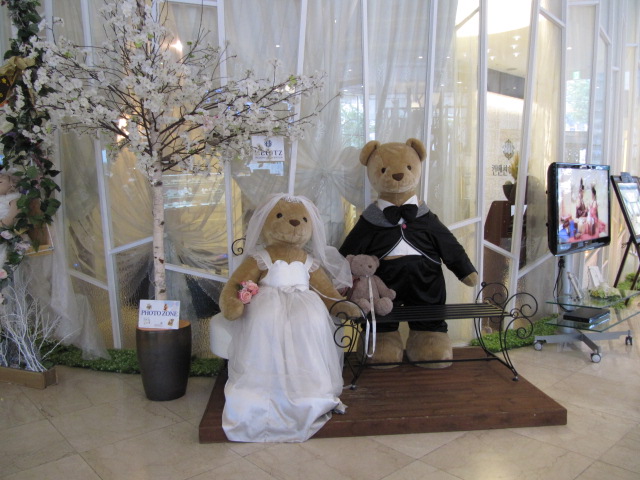
Anatomy of a Typical Korean Wedding


Korean weddings are somewhat of an enigma to the average foreigner here. On the outside, they look kind of like a western wedding, but, on the inside, there's a lot to understand. This is a guide for those who are planning on going to a typical Korean (western style) wedding to understand it a little better.


Upon entering the building, you may have to navigate your way to the particular wedding that you're attending. Most wedding halls have many weddings going on in a day, sometimes at the same time, so you'll have to keep a look out for the bride and groom's name written on a plaque indicating where they are located (Hopefully, for your sake, you can read their names in Korean).

Once you've found the correct wedding hall, it's time to greet the groom and the bride and groom's family. After walking through the line of formal greetings, it is then appropriate to approach the table where you are expected to give some money. How much you should pay depends on a lot of things like how close you are and if you have a guest, but for a co-worker or an acquaintance to I would suggest 50,000 or for a couple 100,000. Of course, if it's a close friend you'd probably want to give more, but you can decide for yourself how much to give. But, there is one rule you need to follow. Be sure to give money on a scale like this:
50,000
70,000
100,000
150,000
200,000 etc etc
Money should be given in increments of 10 and only on odd numbers (unless it's 100, 200 etc). Therefore, 75,000 is not really acceptable amount, nor is 40,000. Last thing, make sure you put it in a white envelope with your name on it so they can record how much you paid.

After you pay your money, if you're good friends with the bride, you may want to go check out the bride's viewing room where she sits before the wedding begins. You can take your photo with her or say hello and congratulations.

Then it's time to find a seat in the wedding hall. Some places have seating around tables and they may serve the meal during the ceremony which leads to lots of talking and drinking while couples take their vows. The presider of the wedding may shush the audience and the audience may hush for a moment before continuing their conversation. Other places are a little more respectful and have chairs set up for viewing the ceremony as a westerner may expect, though the presider may still need to hush people even when there is no food and spirits to distract the audience.


First, the mothers of the bride will walk up to the altar first and light some candles. You'll notice here that the mothers are wearing pink and purple. Pink is the typical color for the mothers of the bride and groom to wear for the ceremony.


Next the groom will walk down the aisle, and then it's time for the bride to make her appearance. At this particular wedding, they had a screen showing the bride as she walked from her viewing room to the hall, then she joined her father to walk her down the aisle.  


Then it's time for the presider to give a speech about love and marriage. Usually, if it's not a church wedding, the presider will be a member of the community like a college professor. However, I am only guessing that they talk about love as marriage, because as I mentioned earlier, Koreans tend to ignore this part of the ceremony entirely and chit chat with the people around them.


Here comes the actual Korean traditional part of the ceremony. The bride and groom show their respect to the parents and bow before each of them. Fortunately, since bowing is so low, the cameramen generally capture all this on film and display it on a screen so all can watch.


Then comes the part of the ceremony which I don't understand at all , the cutting of the cake. Here, our groom has a giant sword like apparatus to cut the cake and photographers zoom around to capture the important moment where the cake is cut. And then the sword knife is taken away, as is the cake, before anyone gets any ideas of eating the silly thing. It goes into a box and I'm still not sure where it goes as it's not with the bride and groom since they usually jump into their wedding car and zoom off for the airport for their honeymoon after the service, just like the olden-days. I'm sorry, but if you're going to put a cake in front of everyone I think it should be eaten. I hate that this ceremony is only about photo ops and not about tradition and meaning. Sorry, rant over.


Then the ceremony ends and the bride and groom walk down the aisle as husband and wife.


But it's not over yet, now it's photo time! First there are photos taken with the family and extended family. Then after that, it's photo time with friends. If you're a friend of the bride or groom, you can get in the photo too!


The bride throws the bouquet at the wedding too, but the tradition here is a little different. In America all the single women line up trying to catch the bouquet, because it means that you will be the next to get married. In Korea, if you catch the bouquet and you don't get married within a year, they will not get married for the next 10 years. So.. usually since no one wants to risk this bad luck they choose a friend who is already engaged to catch the bouquet.


And then there is the food. Most weddings will have a buffet. If you are served at your table by a waiter it means that they probably paid a whole lot of money for the event. The buffet is usually after the ceremony, but once you give your money you get a meal ticket to enter, so theoretically you could go straight up to eat. Fortunately they show video feeds of all the weddings going on (since all the various wedding parties going on for the day eat together in the same hall) so that you can eat your meal and watch the wedding without missing a thing. It seems as though as long as you leave your money, no one really minds if you're in a rush and can't stay for the ceremony and just grab your meal and run.


After the ceremony the couple changes, usually into couple shirts, and jumps into their wedding car and heads for the airport to leave for their honeymoon. The bride and groom usually leaves the same evening or the next morning for their trip and will often stay at an airport hotel if they do leave the next day. If you don't believe this, just take a drive to the airport on a Saturday afternoon and count how many of these decked out cars you see!


Koreans do not generally: 
Have bridal showers
Have bachelor/Bachelorette parties
Give gifts besides money
Dance at the wedding
Have bridesmaids/ groomsmen
Exchange rings during the ceremony

Wednesday, April 3, 2013

리북 손만두: LeeBuk Son Mandu, North Korean Restaurant


LeeBuk Son Mandu is not your typical mandu place for many reasons. First and foremost, it's a North Korean style restaurant, which is what initially drew me to this place. However, that's not all. It also happens to be in a hanok located in the least likely of places to find a hanok, directly behind city hall. Completely surrounded on all sides by modern and semi-modern buildings, there is no way you could accidentally stumble upon this restaurant. There is practically a tunnel of alleyways which lead you to this restaurant. It's not hard to find though, just follow the signs for '리 (이) 북 손만두!

First turn of the alleyway, 

 Second turn of the alleyway,

Aha! Finally, we found the entrance!


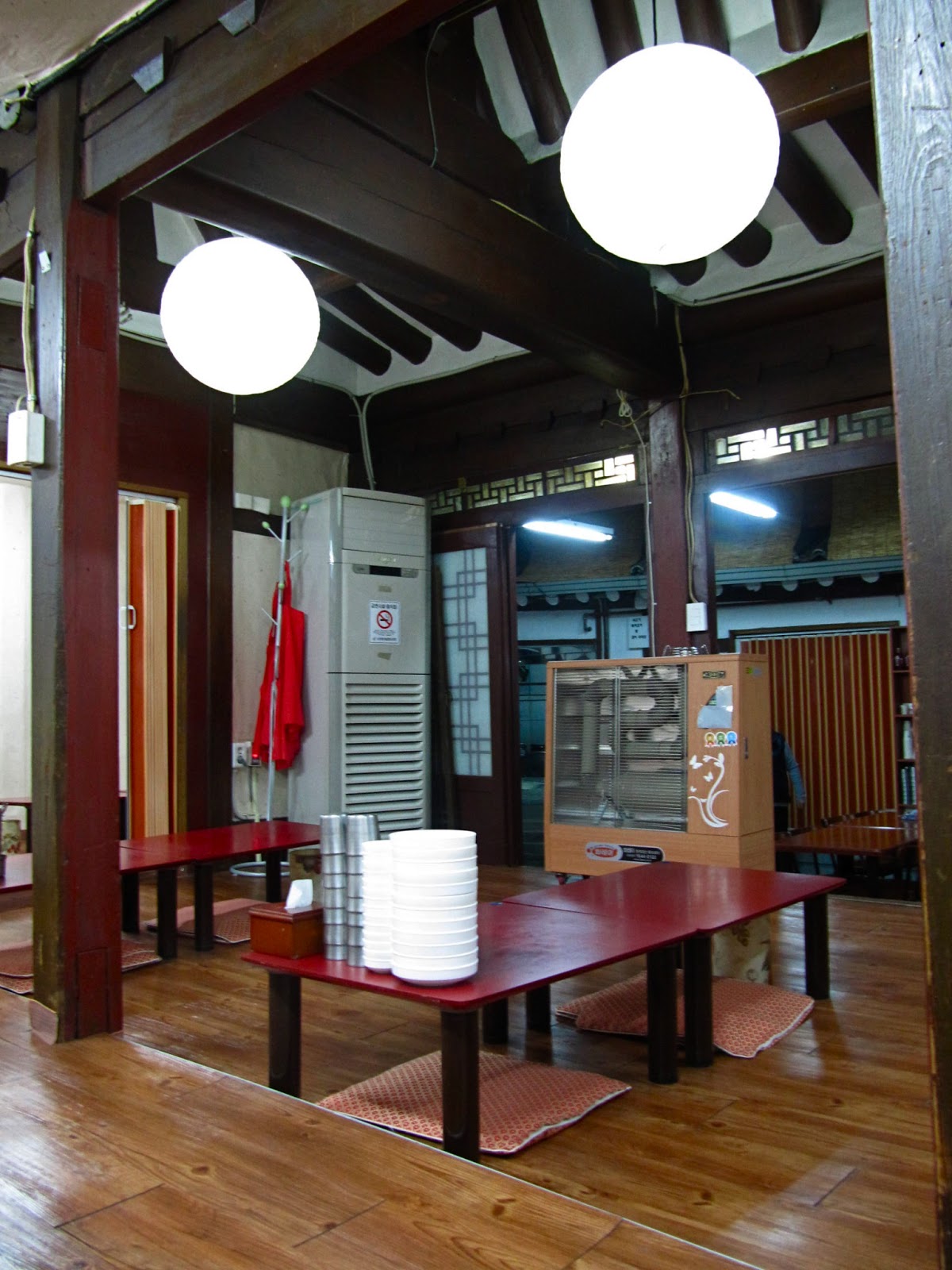
As I mentioned, this restaurant is located in a hanok. They've put a roof over the madang (courtyard) to make more space, but other than this, many of the beautiful hanok features remain. 


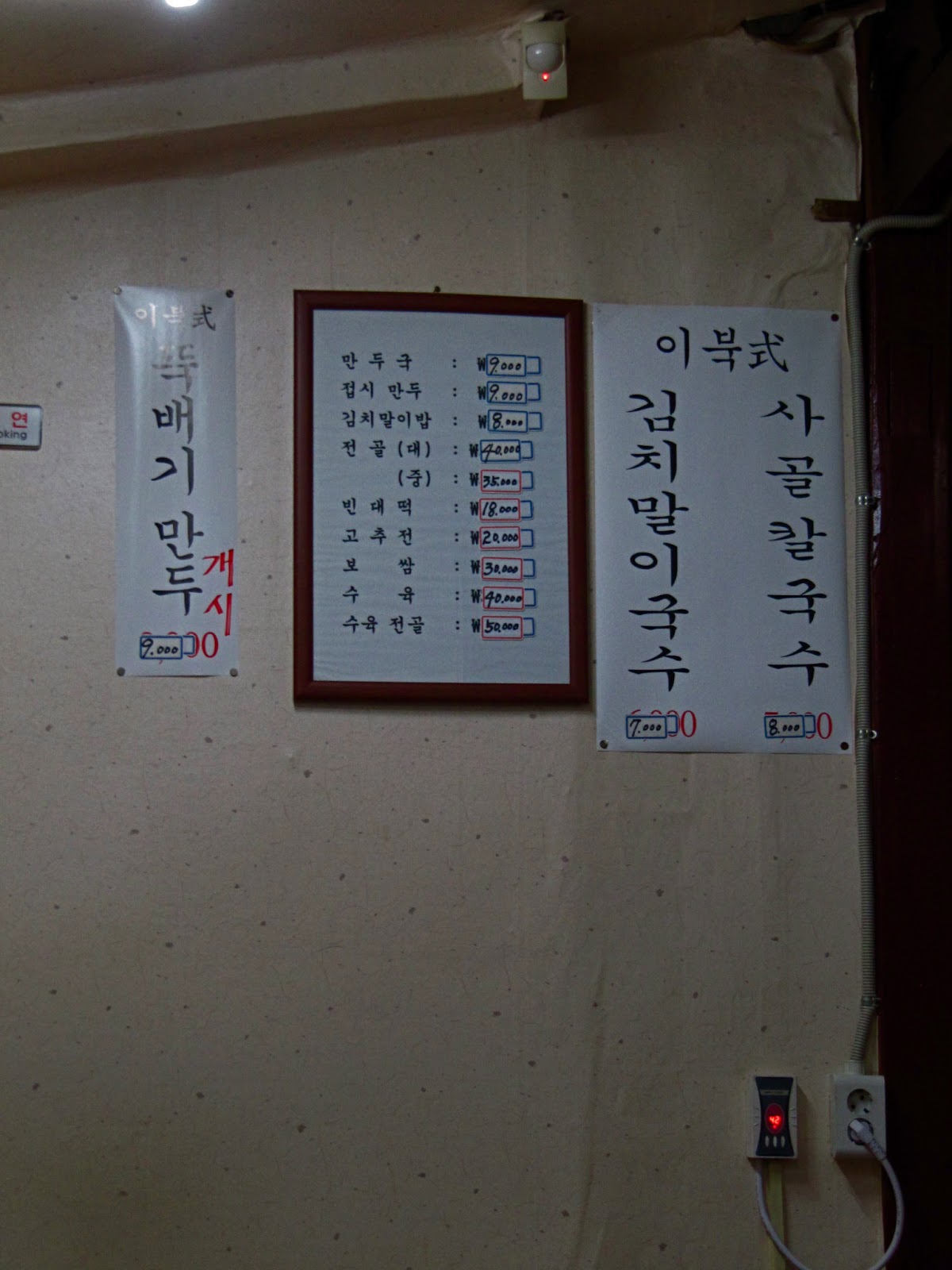
Sinc the name of this restaurant contains the name '손만두' meaning homemade mandu, ordering the mandu went without without questioning, we actually went with the 만두국. However, after previewing some blogs on the Korean blogosphere, I saw that most people were actually raving about the Kimchi mari bap (김치마리밥). It is not the sort of mari, as in a roll, but as in the meaning of 말다 which means to put cooked rice into water. So, here, kimchi mari bap means rice in a bowl of water and kimchi. There is also a kimchi mari guksu which is the same but with noodles as well. Actually, I tried ordering it but the night we went they were all out, so I had to go with the kimchi mari bap.

Here's our table


 Ok, first the manduguk. Ok, I have to say I was a little dissapointed here. The mandu were great, don't get me wrong, but the soup was like water... sorry, peppery water. It's not just here that has disappointed me like this before, I've found that for some reason it's hard to get a manduguk with a decent, flavorful (meaning not pepper flavored) broth in this country. The best I've had was in Gangwondo at Namkyeong Siktang. If I were you, I'd skip the guk and just get the mandu. Or perhaps try the 뚝배기만두


But, as the bloggers would suggest, the real star of the evening was the kimchi mari bap. I had low expectations for this one, because, well, it's a bowl of kimchi and rice in ice water. it sounds pretty awful. However, this was surprisingly refreshing and delicious, and though you can't see it there is a surprisingly large amount of rice in the bottom of the bowl. The best way to describe the flavor of this is 고소해요, a word which doesn't directly translate to English, but means having the taste of sesame oil. It's a good thing though!

My friend who came with me wrote a blog post about this restaurant as well, but with many more selections as he came back two more times later without me. Check out his post here.

리북 손만두 Leebuk Son Mandu
17-13, Mugyo-ro, Jung-gu, Seoul
서울 중구 무교로 17-13 (무교동)

Getting here is slightly tricky, but not too bad:

City Hall Station (Seoul Subway Line 1, 2), Exit 4.
Go straight 60m and turn right onto Sejong-daero 20-gil Road.
Go straight 150m and turn left at the 4-way Intersection.
Go 50m and turn left at the first corner.
Turn left onto the the small alleyway between 7-Eleven and Jeil Garden (제일가든).
Libuk Sonmandu (리북 손만두) is located at the end of the alley.
http://asiaenglish.visitkorea.or.kr/ena/CU/CU_EN_8_1_4_4.jsp?cid=757746


View 리북 손만두 Leebuk Son Mandu in a larger map

Monday, April 1, 2013

Five Korean Comedies You Don't Know, but Should


Over the past year or so I've gotten a lot of opportunities to watch some older Korean movies. While I know Park Chan Wook's movies, like 'Oldboy' and various action movies such as 'The Host' have become international sensations, personally, I'm into more lighthearted films. I've compiled a list of the top five comedies that I've seen recently, most of which are older, never really hit the international scene and are not very well known. They may not be the easiest to track down, but if you can find them, they will be well worth watching!


웰컴 투 동막골: Welcome to Dongmakgol

Year: 2005
Directed by : 박광현 Park Kwang Hyeon
Actors: 정재영 (Jeong Jae-Yeong), 신하균 (Sin Ha-Gyoon), 강혜정(Kang Hye-Jeong)   

 Rewind to the Korean war. While war rages on around the Korean peninsula, one idyllic town in the mountains still remains untouched and oblivious to the chaos that surrounds them. That is, until a mysterious machine (an airplane) drops from the sky, carrying a strange man with blue eyes and blonde hair (an American GI). The townfolk are baffled by this mysterious man and his odd metal contraption, but soon the war is brought to them when two South Korean soldiers and three North Korean soldiers wander in and create a stand off in the middle of the village. In the end, the only victim of the stand-off is the village's food supply which was accidentally blown up by a grenade. 


Feeling responsible (and trapped with allied forces closing in on all sides), the North Korean solders offer to stay and help the villagers to restock their food supply, and the South Korean solders are also guilted into helping as well. As one would expect, comedy ensues. However, the little magic spell that has been cast over this town seems to take hold of the soldiers as well and allow for reconciliation.

I really love this movie. It reminds us that North Koreans and South Koreans are just humans after all. They are enemies because of what their governments have told them. In this little idyllic town of Dongmakgol, those problems between them cease to matter and the soldiers just become human beings again.


나의 결혼원정기: Wedding Campaign

Year: 2006
Directed by: Hwang Byung-kook
Actors: 수애 (Soo Ae), 정재영 (Jeong Jae-young), 유준상 (Yoo Jun-Sang)

This comedy, which premiered in 2006,  lightheartedly touches upon some really serious issues in Korea today. The story revolves around two men from the country who are in their late 30's and come to the realization that they still aren't married. Parents and grandparents are starting to put pressure on them to find someone to help run their house. Some other folks in town have started to bring home wives from a country they can't pronounce, but sounds something like Uz-u-be-ku. They can't find it on a map, but they decide that they will go there to find a young, pretty bride to bring home.


The country is in fact Uzbekistan, and on upon arriving, they find themselves amidst a corrupt buisness of selling Uzbek brides to South Korean men. It takes them a while to realize it, too, but their translator is a North Korean defector who has adopted a South Korean accent and is trapped in her miserable job until she can afford to buy fake South Korean passports from her boss so she can finally stop running from the law.

This is really a hidden gem of a movie. It touches on many current issues; such as North Korean defectors, wedding culture in South Korea and the issue of international marriages; in a comedic way. 


영어완전정복: Please Teach Me English

Year: 2003
Directed By: 김성수 (Kim Seong-Su)
Actors: 장혁 (Jang Hyeok), 이나영 (Lee Na Young)

This is the story of a man and woman who sign up for a class at an English hagwon (language institute) in Seoul. The girl, whose English name is  "Candy" works in a government office and often needs to deal with foreigners who have problems. The man, called "Elvis" in English, will soon meet his sister who was put up for adoption as a baby and grew up in America. Both want to speak English badly, but both struggle something terrible with the language. Their native speaker teacher isn't much help to them either and quickly gets frustrated with their lack of progress.


Elvis is a bit obsessed with the beautiful English teacher, but Candy has eyes only for Elvis. Unfortunately, Candy is a very awkward, geeky gal with no coordination or tact... her every effort to catch the attention of Elvis goes unrewarded. However, they become friends and the two of them try to learn English and deal with their personal problems together.

This movie is an oldie but goodie. It's worth tracking down and watching if you can. If you've got some basic Korean skills, you may not even need subtitles since the characters spend most of the movie trying to speak English (however, sometimes being able to read the Korean subtitles is useful to figure out what they are trying to say). Anyone who has taught English in Korea will definitely relate to this story and probably get a good kick out of this movie. 


육혈포 강도단: Revolver Gangsters' Gang


Year: 2010
Directed by: 강효진 (Kang Hyo-Jin)
Actors: 나문희 (Na Moon-Hee), 김수미 (Kim Soo-Mi), 김혜옥 (Kim Hye-Ok)


Three halmonis (grandmothers) are fed up with their life of just meerly scraping by and making ends meat. They decide to have one last adventure in their life and take a VIP trip to Hawaii. The halmonis work together to save their money in some very creative but not very legal ways. Finally, after years of scrimping and saving their money they have finally saved up the exact amount of money required for three VIP all-inclusive tours to Hawaii. They try to pay in cash, but, well, this is Korea. It's got to be sent through a bank wire. When they bring their hard-earned money to the bank, disaster strikes. The bank is robbed and their money is taken before it could be deposited into the bank. 


The three halmonis don't take lightly to this offense and track down the robber and demand their money back. He doesn't have it, but he does offer to train them to rob the bank again themselves and get their money back. Comedy ensues as the halmonis try their hardest to rob a bank and get the vacation they feel they deserve. 

This is a great movie for many reasons. For those who have lived in Korea and seen the strength of many older Korean women, it's not entirely unbelievable that three halmonis actually could rob a bank in revenge for the money that they lost. While the story is fairly predictable, there are enough plot twists and turns to keep you interested until the end. These three are definitely not your scarf-knitting, rocking-chair-loving grandmas! 


김씨 표류기: Castaway on the Moon

Year: 2009
Directed by: 이해준 Lee Hae-Jun
Actors: 정재영 (Jeong Jae-Young), 정려원 (Jeong Ryeo-Won)


Somewhat along the same lines as the Hollywood movie, Castaway (2000), Castaway on the Moon (2009) is a Korean take on being castaway on a deserted island. However, don't let this turn you off, this Korean adaptation is pure genius.

Mr. Kim, giving up on life after many failures, decides to take his own life by jumping off a bridge into the Han River in Seoul. However, his attempt at taking his on life fails, and he finds himself washed up on a "무인도" (literally "no person island") in the middle of the Han River. As one would expect, he tries with all his might to escape... at first. But after many failed attempts, he finally comes to enjoy his new freedom. He starts to make full use of all the trash that has accumulated on the island to make himself at home. 


No one knows he is there, save for one person: a neurotic shut-in girl in her early twenties who has an obsession with taking close up photos of the moon. From her apartment window across the river, she only allows herself to look at the moon with her telephoto lens camera, but one night she accidentally scans her camera past the island where she sees a message: HELP. In English. She becomes intrigued, and rather than taking photos of the moon, she changes her focus to following the life of Mr. Kim.

This Korean take on Castaway is, in my humble opinion, better than the Hollywood version. The plot is intriguing and the irony that he is alone in the middle of a metropolis is what makes this movie great. He learns to survive using the trash that we think nothing of. This plot line by itself would make for an interesting enough story, but then, the intrigue of the second character, a castaway of a different sort, holed up in her bedroom, afraid of being seen by the rest of the world really makes this movie. The idea that wanting to escape from the world can actually bring two people together is quite moving. Don't worry though, this is no tearjerker, the irony of the entire situation is enough to keep you chuckling throughout the entire movie. 

Watching this with subtitles is, of course, best for those who don't speak Korean, but there is very little dialogue since both characters are alone in their own worlds. So, if you happen to pass this while flipping through channels, it may be worth watching even without subtitles. Most situations are pretty self explanatory, especially on the island, and so you may be able to follow the movie quite easily if you have just basic Korean skills.


How to watch: 
For those who are in Korea and who have the correct region DVD player, I highly recommend shopping for used DVDs. Why? Well, it tends to be hard to find new DVDs in this city that aren't pirated, but generally used DVDs are actually legitimate copies. Perhaps you don't care about buying pirated DVDs, but the great thing about legitimate DVDs is that they generally come with English subtitles! The best places to shop for used DVDs are in the Technomart in Gangbyeon, or any used flea market. 

For those who are outside of Korea, it should be easy to find subtitled videos to stream online by a simple Google search. However, most of the sites are blocked in Korea. 

How do you get access to Korean movies?